 Rochester:

When Is a Foundation Crack Serious?
Finding a crack in your home's foundation can be concerning, but not every crack means there's a major structural problem. The size, direction, location, and whether the crack is changing over time can all help determine how serious it may be.
Understanding the different types of foundation cracks and the warning signs to look for can help you know when it's time to call a professional.
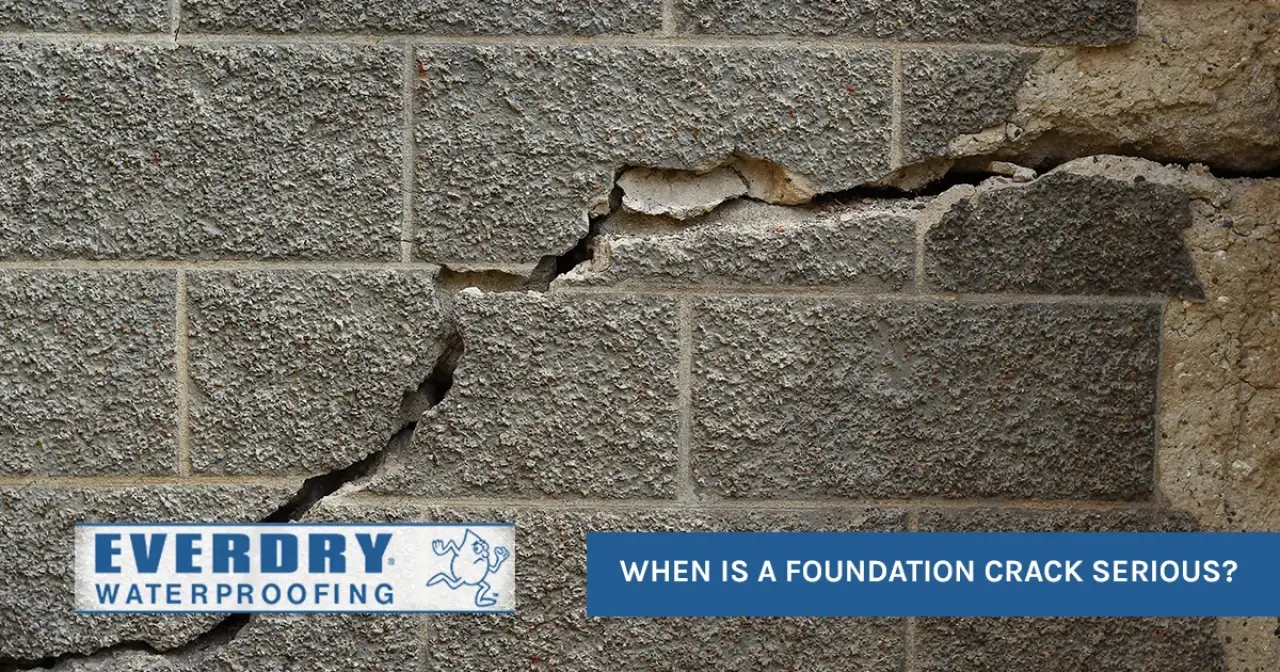
When Are Foundation Cracks Serious?
Foundation cracks may be more serious when they're wide, growing, allowing water into your basement, or accompanied by other signs of foundation movement. Horizontal and stair-step cracks can also be more concerning than small, stable hairline cracks because they may point to pressure or movement affecting the foundation.
The best way to understand what's happening is to look at the crack itself along with any other changes around your basement and home.
What Do Different Types of Foundation Cracks Mean?
Foundation cracks can appear in several patterns, and the direction and shape of a crack can provide clues about what may be causing it.
1. Vertical Cracks
Vertical foundation cracks commonly develop as a home settles or concrete shrinks over time. Small vertical cracks aren't always a sign of a major structural problem, but they should be monitored, especially if they're widening or allowing water into your basement.
2. Horizontal Cracks
Horizontal cracks run from side to side across a foundation wall and can be a sign that outside soil or water pressure is pushing against the wall. These cracks can be more serious, particularly if the wall is also bowing or leaning, and should be evaluated by a professional.
3. Diagonal Cracks
Diagonal cracks travel at an angle across a foundation wall and may develop when one part of the foundation settles differently than another. Their severity can vary, so it's important to pay attention to the width of the crack and whether it continues to grow.
4. Stair-Step Cracks
Stair-step cracks follow the mortar joints between concrete blocks or bricks, creating a pattern that looks similar to stairs. They can be associated with uneven foundation settling or movement and may require professional attention, particularly if the cracks are widening or the wall appears to be shifting.
5. Hairline Cracks
Hairline cracks are very thin cracks that can develop as concrete cures, shrinks, or experiences minor movement. While they're often less concerning than larger cracks, they shouldn't automatically be ignored, especially if water is coming through them or their size changes over time.
Signs a Foundation Crack May Be Serious
A crack's appearance is only part of the picture. Watch for other warning signs that could point to a larger foundation or moisture problem.
- The crack is getting wider: A crack that continues to grow or change may indicate ongoing movement in your foundation rather than a one-time change.
- The crack is horizontal: Horizontal cracks can develop when pressure from the surrounding soil or water pushes against a basement wall.
- The wall is bowing or leaning: A foundation wall that curves, bulges, or leans inward can be a sign of significant pressure and should be professionally inspected.
- Water is entering through the crack: Even a relatively small crack can become a problem if it gives groundwater a path into your basement.
- You notice several cracks: Multiple cracks or cracks appearing in different areas of the foundation may indicate a larger issue that needs to be evaluated.
- Doors or windows are sticking: Changes elsewhere in the home, including doors and windows that suddenly become difficult to open or close, can sometimes occur alongside foundation movement.
- Floors are becoming uneven: Sloping, sagging, or uneven floors may be another reason to have your foundation checked.
- The crack changes quickly: If a crack becomes noticeably longer or wider within a short period, it's a good idea to have a professional determine what's causing the movement.
Get Your Foundation Cracks Checked by Everdry Waterproofing of NY
Some foundation cracks are minor, while others can point to water pressure, settling, shifting, or structural concerns. Since it isn't always easy to tell the difference on your own, having cracks professionally evaluated can help you understand what's happening and what steps may be needed.
If you've noticed cracks in your basement or foundation, contact us at Everdry Waterproofing of NY. We provide professional foundation inspections and repair solutions for homeowners throughout Rochester, Buffalo, Syracuse, and surrounding areas of Western and Central New York. Schedule your free foundation inspection today.