 Rochester:
What Is a French Drain and Why Your Basement Might Need One
If you’ve spotted water pooling near your foundation or moisture making its way into your basement, it could be a sign that your property needs better drainage. A French drain is one of the most reliable ways to redirect water away from your home and protect your foundation from long-term damage.
Before issues get worse, it’s worth exploring how French drains work and when they’re needed.
What is a French Drain System?
A French drain is a water management system designed to redirect groundwater and surface water away from areas where it can cause damage, like your foundation or basement. Despite the name, it has nothing to do with France. It's actually named after Henry French, a 19th-century farmer and judge who popularized the concept in his 1859 book on farm drainage.
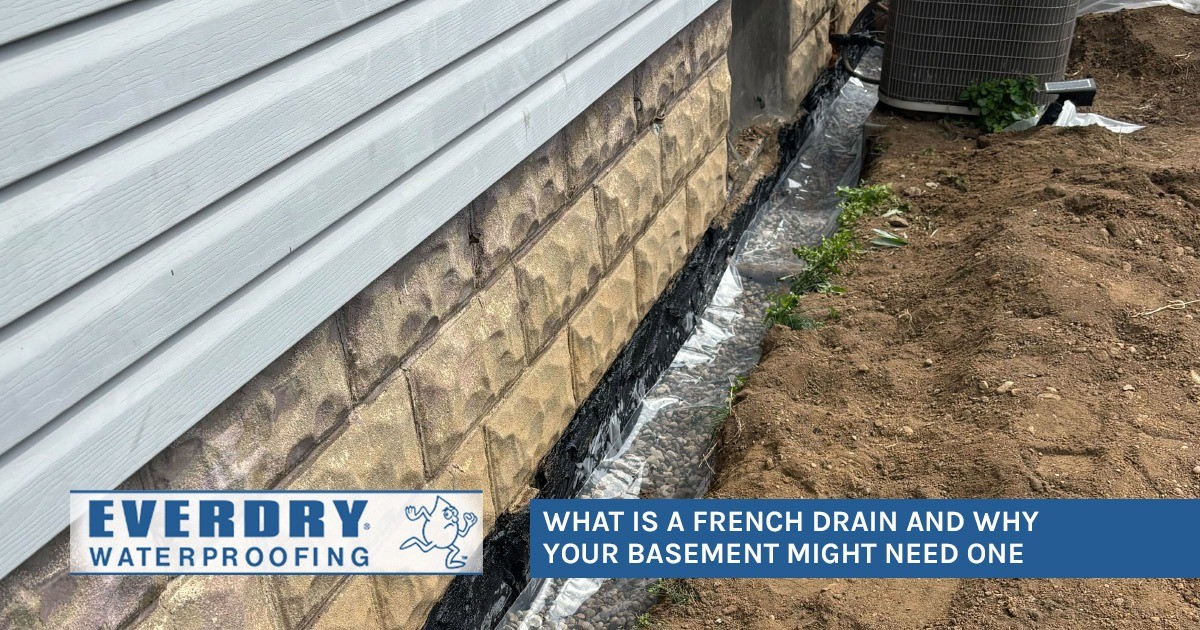
At its core, a French drain is a gravel-filled trench that contains a perforated pipe. That pipe collects excess water and channels it away from your home to a safer discharge point, like a storm drain, dry well, or a lower area of your yard.
Learn More About Basement Waterproofing
How Does a French Drain Work?
The system works by taking advantage of a simple principle: water flows downhill and naturally moves through loose material like gravel. Here's how it all comes together:
- A trench is dug in the area where water tends to accumulate or travel.
- The trench is lined with a water-permeable landscape fabric to keep soil and debris from clogging the system over time.
- A layer of gravel is laid at the bottom, followed by a perforated pipe.
- More gravel is added on top, and the fabric is folded over to wrap everything in place.
- As groundwater builds up in the surrounding soil, it seeps into the gravel and flows into the pipe, which then carries it away from your home.
The result is a passive, low-maintenance system that keeps water moving in the right direction before it ever has a chance to reach your basement walls or foundation.
Why You Might Need to Install a French Drain
Not every home needs a French drain, but there are some clear signs that one could make a real difference. Here are the most common reasons homeowners in the Rochester, Buffalo, and Syracuse areas turn to this solution.
You Have a Wet or Flooding Basement
This is the most obvious sign. If water is getting into your basement during heavy rain or snowmelt, it's likely that hydrostatic pressure is pushing moisture through your foundation walls or floor. A French drain can relieve that pressure by intercepting water before it reaches the foundation.
Water Pools Around Your Foundation After Rain
If you step outside after a storm and notice standing water sitting against your home's foundation, that's a warning sign. Over time, that pooling water can work its way into cracks and cause serious structural damage. A French drain redirects that water before it becomes a problem.
Your Yard Has Poor Drainage
Homes situated on flat lots or at the bottom of a slope are especially vulnerable to drainage issues. If your yard stays saturated for days after rain, the surrounding soil is likely staying wet too, and that moisture doesn't stay in the yard forever. It eventually finds its way toward your foundation.
You're Dealing With Soil Erosion
When water runs across your yard without a clear path to drain, it carries soil with it. If you've noticed bare patches, ruts, or washout areas forming in your landscaping, a French drain can give that water a proper outlet and protect your yard in the process.
You've Noticed Efflorescence or Moisture Stains on Basement Walls
White chalky residue on your basement walls, often called efflorescence, is a sign that water is moving through your concrete and leaving mineral deposits behind. It means moisture is consistently present, and a drainage solution like a French drain may be needed to get that under control.
You've Recently Added a Patio, Driveway, or Hardscape
Adding hard surfaces to your property changes how water flows across your yard. Impermeable surfaces like concrete and pavers prevent water from soaking into the ground, which can push runoff toward your home. A French drain is a smart addition after major landscaping or hardscape projects.
Schedule a Free Basement Inspection Today
French Drain FAQs
How much should a French drain cost?
The cost of a French drain can vary quite a bit depending on the length of the system, soil conditions, and whether it's interior or exterior. In general, homeowners can expect to pay anywhere from a few hundred to several thousand dollars, which is why it's worth getting a professional assessment before committing to a solution.
How deep should a French drain be?
Most French drains are installed between 18 and 24 inches deep, though an interior basement French drain (sometimes called a drain tile system) may follow the perimeter of your basement floor at a shallower depth depending on your foundation type.
How can you tell if a French drain is working?
The clearest sign that your French drain is doing its job is that you stop seeing the problems that prompted the installation in the first place, whether that's a dry basement, no more standing water after rain, or reduced moisture along your foundation walls.
Protect Your Home from Future Water Damage
If any of the warning signs above sound familiar, it's worth having a professional take a look before the problem gets worse. Everdry Waterproofing of NY has been helping homeowners in Rochester, Buffalo, and Syracuse protect their homes for over 40 years, and we're here to help you find the right solution.
Schedule your free basement inspection today and let's figure out what your home needs.